‘He karapitipitinga mariko – Immersive regenerative tourism experiences in Aotearoa’ is an interdisciplinary research programme that turns challenges into opportunities, researching and enabling new forms of physical (in person) and virtual (immersive) tourism by creating augmented and extended visitor experiences that are universal and accessible.
It explores the digital augmentation of the tourism experience of physical travel to Aotearoa enabling virtual travel to and within Aotearoa.
Addressing tourism's systemic issues
While tourists, tourism operators and destination managers are emerging from the impact of the COVID-19 pandemic, it is timely to address the serious systemic issues that were already confronting tourism.
Post-pandemic tourism must be more sustainable and resilient, while limiting and reversing damage caused to fragile cultural and natural heritage and their kaitiaki. There will be no return to the ‘old tourism’.
The current crisis offers both the challenge and the opportunity to build a new regenerative tourism model. He Karapitipitinga Mariko plays a key role in addressing challenges of an industry that contributed more than 10% to GDP in 2019.

Creating a new and sustainable tourism model
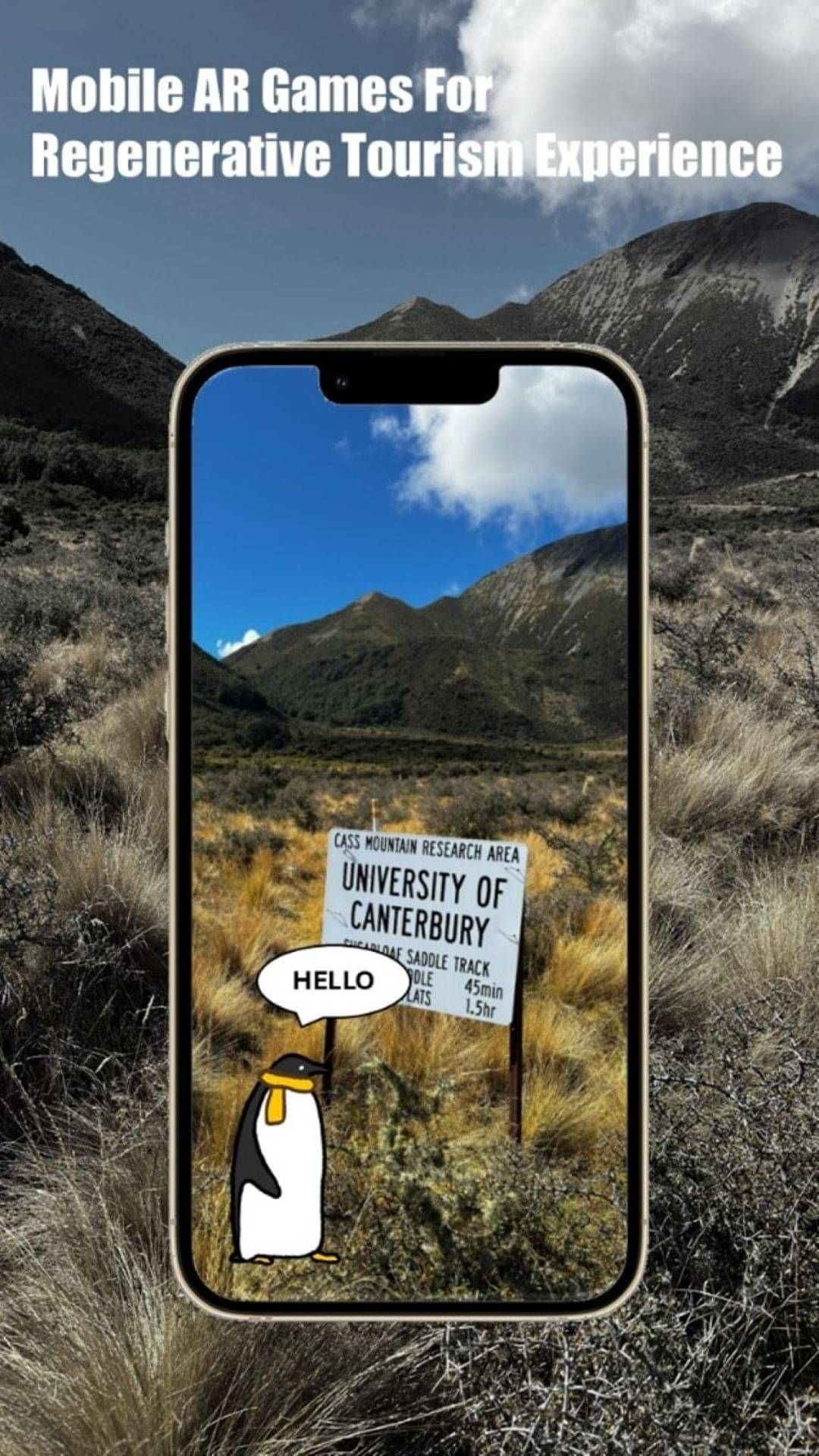
Using techniques from Virtual and Augmented Realities, we are creating platforms that enable immersive interactive tourist experiences. This provides visitors who are onsite or anywhere around the world with unique real-time experiences, and opportunities to develop deep connections to people and places. Our technology platforms afford virtual visitors the feeling of actually being there, and will augment the temporal dimensions of the experiences of physical and virtual visitors, providing experiences of the present that offer memorable insights into the past and the future.
These created experiences facilitate new forms of tourism, redefining touristic travel and the co-creation of experiences, in the face of financial, environmental, health, or travel restrictions. Visitor experiences will be able to be consumed with or without the need for physical travel, thus enabling controlled and sustainable access for tourists to inaccessible and sensitive cultures and places.
The research project embeds local iwi, tourism business operators, destination managers, and technology providers in partnership with world-leading researchers in the fields of tourism, indigenous studies, and virtual and augmented reality technology. Together, we are researching and developing key prototype technologies for advancing a ‘new’ tourism model that will contribute to the transformation of the tourism sector into a sustainable, resilient and low-carbon knowledge-intensive industry with a particular focus on the Māori communities throughout Aotearoa.
Environmentally sustainable tourism
The research project offers a new approach to protect fragile environments from visitor impacts that threaten our natural and cultural assets.
It allows for low-carbon experiences for both international and domestic tourists.
International visitors may choose to experience Aotearoa virtually to reduce emissions, broadening potential virtual engagement far beyond established international tourist markets. Besides being a clean alternative to travel, it can also compensate for latent tourists during times of travel disruption.
Likewise, physically present visitors, international and domestic, may seek virtual alternatives, eg. VR/AR flights could serve as an alternative to high carbon helicopter flights. Virtual tourism can foster regenerative tourism by engaging visitors in experiences of dynamic environments in the present, but also across past and future (providing direct feedback on environmental activities/behaviours and outcomes).